Leheriya Poshak for Newly Married Brides: Traditional Elegance for Every Festival
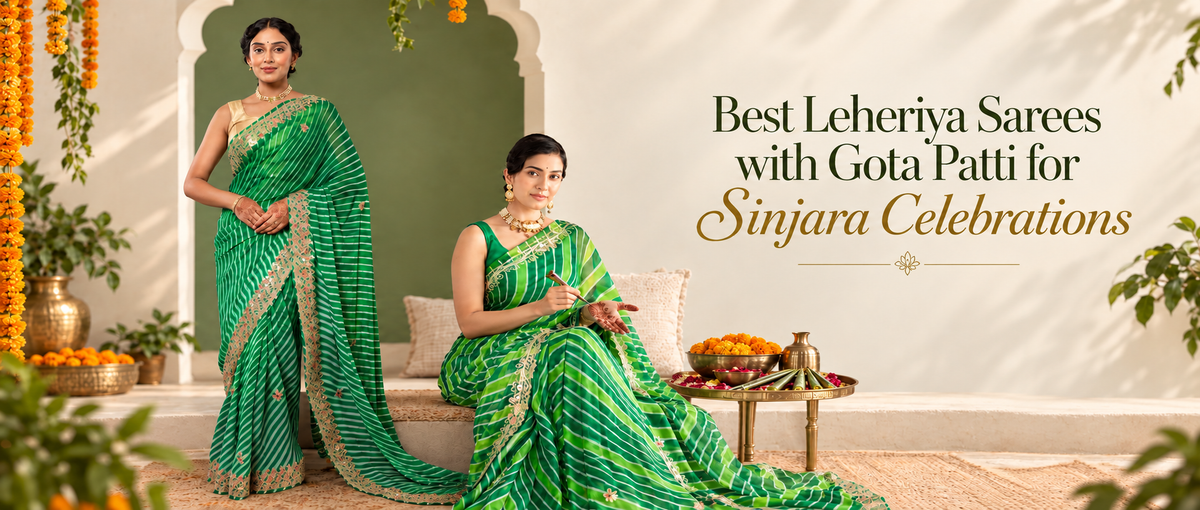
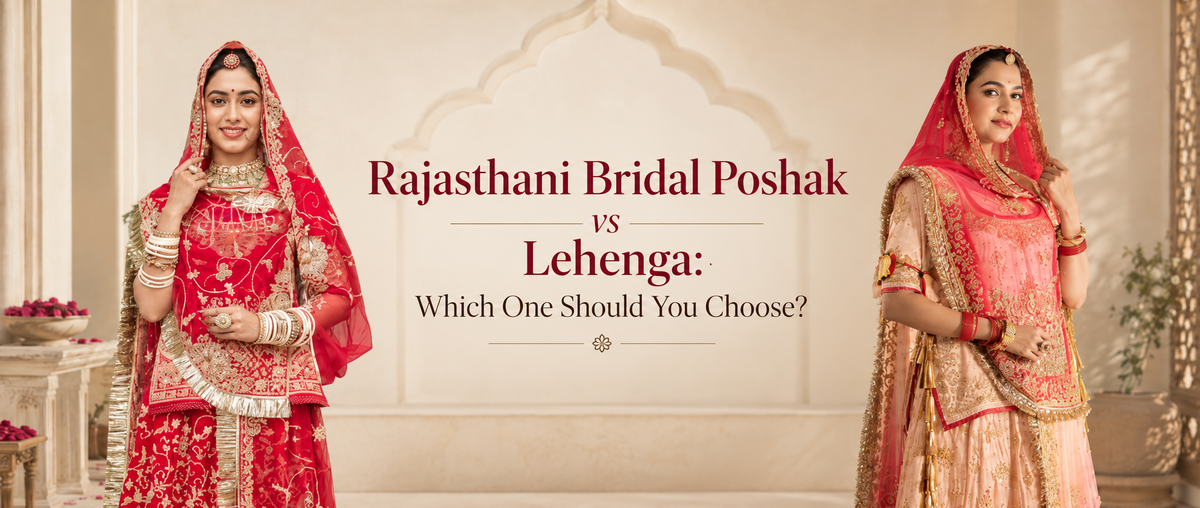
Rajasthan gave the world tie-dye long before it became a global trend, and a Leheriya Poshak for Newly Married Brides is where that craft still lives on. New brides wear it because the colors speak louder than plain fabric ever could.
There's a reason this outfit keeps appearing at every festival season after a wedding. The wave pattern signals joy. The georgette signals comfort. Put those two together, and a Leheriya Poshak for Newly Married Brides becomes hard to skip.
What Makes Leheriya Poshak for Newly Married Brides Special?
Two things carry the weight here: the dye technique and the fabric underneath it.
Artisans tie small knots into the cloth by hand before dyeing a Leheriya Poshak for Newly Married Brides. No machine replicates that irregularity, which is why hand-tied waves look richer than printed ones.
Georgette does the rest of the work. It falls softly, breathes in the heat, and doesn't fight a bride's movement during long ceremonies. Add sequins and aari detailing on top, and the shine never turns heavy.
A quick look at what defines the piece:
- Hand-tied wave dye, never printed
- Georgette fabric that stays light for hours
- Aari and sequin work for shine
- A silhouette rooted in Rajputi tradition
Why Is Leheriya Poshak for Newly Married Brides a Good Choice?
Two reasons stand out: it looks rooted, and it photographs well.
A poshak that leans too modern can lose the cultural thread. One that leans too traditional can feel dated in photographs. A Leheriya Poshak for Newly Married Brides sits between the two, which is why so many brides in Jaipur reach for it first.
Comfort matters as much as looks. Georgette handles a summer wedding without clinging, and it still holds shape through a colder winter function.
Which Colors Suit a Leheriya Poshak for Newly Married Brides?
Daytime asks for brightness. Evening asks for depth.
Rani pink and yellow dominate daytime festivals like Teej and Gangaur. Wine and blue take over once the lighting turns softer in the evening.
Here's how the palette usually breaks down:
- Rani pink for auspicious occasions
- Yellow for Teej and Gangaur
- Wine for evening functions
- Blue for daytime family gatherings
- Green for prosperity-linked events
- Red for traditional bridal wear
Brides after something bold usually pick the Rani Pink Leheriya Rajputi Poshak.

Those who want a quieter tone tend to go with the Green Leheriya Rajputi Poshak instead.

How to Style Leheriya Poshak for Newly Married Brides?
Jewelry first, dupatta second — that's the order that works best for a Leheriya Poshak for Newly Married Brides.
Kundan sets paired with a matching bindi suit daytime festivals well. Evening events call for something heavier, like statement earrings and a maang tikka.
A festival-by-festival reference:
|
Festival |
Recommended Color |
Jewelry Style |
|
Teej |
Yellow or Green |
Kundan sets, bangles |
|
Gangaur |
Rani Pink |
Temple jewelry |
|
Diwali |
Wine or Red |
Polki necklace |
|
Family Function |
Blue |
Light gold jewelry |
The dupatta drape matters more than most brides expect. Worn over a single shoulder, in the traditional Rajasthani way, it keeps the wave pattern visible instead of hiding it under folds of fabric.
Which Fabric Suits Leheriya Poshak for Newly Married Brides Best?
Georgette, without much competition.
A Leheriya Poshak for Newly Married Brides needs a fabric that holds dye cleanly and still falls gracefully, and georgette does both. Heavier fabrics tend to blur the wave pattern; georgette keeps every line sharp.
For a richer finish, the Pure Georgette Rani Mothda Aari Sequins Jaal Work Poshak is worth checking.

Daytime events pair better with the Pure Georgette Yellow Leheriya Aari Sequins Jaal Work Poshak.

Where to Find Authentic Leheriya Poshak for Newly Married Brides?
Look closely at the tie marks before buying anything. Genuine dye work leaves small, uneven puckers in the fabric. Printed versions look flat and too perfectly even to be real.
Jaipur's markets have carried this craft for generations, and online stores now sell verified Rajputi wear too, making it easier for brides outside Rajasthan to buy the real thing.
Worth exploring: the Pure Georgette Wine Aari Sequins Jaal Work Poshak for evenings and the Georgette Orange Mothda Aari Sequins Jaal Work Poshak for a warmer palette.

For border and booti work, the Pure Georgette Red Leheriya Aari Sequins Kardana Border Booti Work Poshak and the Pure Georgette Blue Mothda Aari Sequins Border Butti Work Poshak both hold up well.

Brides drawn to unusual tones might prefer the Samudri Leheriya Rajputi Poshak, which trades the usual reds and pinks for a sea-blue shade.

A Leheriya Poshak for Newly Married Brides isn't going anywhere soon. It has outlasted plenty of fashion cycles already, and the right color and fabric choice will keep it relevant for a long time yet.
Frequently Asked Questions
What is a Leheriya Poshak for Newly Married Brides?
A traditional Rajasthani outfit with hand-tied wave-pattern dye, worn by new brides during festivals and family functions.
Which fabric works best for this poshak?
Georgette, since it holds dye cleanly and drapes with less bulk than heavier fabrics.
Can it be worn beyond wedding season?
Yes, it fits regular festivals like Teej and Gangaur just as naturally as weddings.
Which color do most new brides prefer?
Rani pink and yellow for daytime events, wine and blue once evening sets in.
What's the simplest way to style it?
Pair it with Kundan or temple jewelry and drape the dupatta over one shoulder.
Stay connected with us on Instagram and Facebook for exclusive launches, styling tips, and festive collections.